
Main Courses
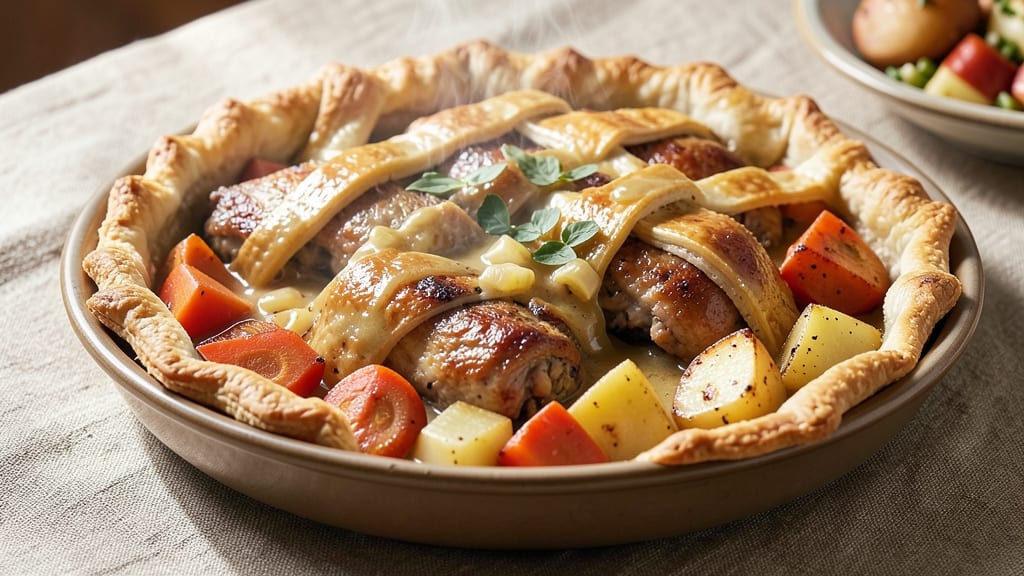
This English pot pie recipe delivers all the comfort of a classic British home-cooked meal in one perfect dish. The secret lies in a rich, savory filling of tender chicken, root vegetables, and velvety gravy—all sealed under a golden, flaky crust that turns crisp at the edges.
After years of perfecting the technique, I’ve cracked the code for a crust that’s light yet sturdy, never soggy, and always irresistibly buttery. The aroma alone—warm, savory, and slightly sweet—will have your kitchen feeling like a cozy English pub.
The foundation of a great pot pie starts with the filling: chicken thighs for juiciness, carrots and potatoes for heartiness, and a deep, herby gravy that ties everything together.
I use a blind-baked crust to ensure it stays crispy while the filling bakes to perfection, a technique that separates this recipe from the rest. The result? A pie with layers of flavor—tender meat, caramelized vegetables, and a crust that’s so flaky you’ll want to eat it first.
It’s the kind of dish that feels like a hug on a chilly evening.
What makes this recipe truly special is how it balances simplicity with restaurant-quality results. With just a few key steps—sautéing the vegetables, simmering the gravy, and assembling the pie—you’ll end up with a dish that’s impressive yet approachable.
The crust achieves that golden, shatteringly crisp finish without requiring any special tools, and the filling stays moist and flavorful thanks to a simple but effective technique. This isn’t just dinner; it’s a centerpiece for gatherings, a meal that turns ordinary weeknights into something memorable.
Serve it with a simple green salad or crusty bread to soak up every last drop of that savory gravy. The leftovers? Even better the next day, if there are any. Let’s get started—your table is about to be transformed.
Ingredients for english pot pie
These quality ingredients transform into a restaurant-worthy English pot pie with golden crust and savory filling.
| Ingredient | Amount | Notes |
|---|---|---|
| Chicken Thighs, Bone-In 🍗 | 1 ½ lb | Skin-on for extra flavor |
| Carrots 🥕 | 1 ½ lb | Peeled and cut into chunks |
| Russet Potatoes 🥔 | 2 lb | Peeled and cut into chunks |
| Yellow Onion 🧅 | 1 whole | Diced, medium size |
| Garlic Cloves 🧄 | 4 cloves | Minced for depth of flavor |
| Unsalted Butter 🧈 | ¾ cup | Cold for perfect crust |
| All-Purpose Flour 🌾 | 2 ½ cups | Plus 1 tbsp for dusting |
| Ice Water 💧 | ½ cup | For dough elasticity |
| Chicken Stock 🍲 | 2 cups | Homemade preferred |
| Whole Milk 🥛 | ½ cup | Full-fat for richness |
| Fresh Thyme Leaves 🌿 | 1 tbsp | Or 1 tsp dried |
| Salt 🧂 | 1 ½ tsp | Diamond Crystal preferred |
| Ground Black Pepper 🌶️ | ½ tsp | Freshly cracked |
| Fresh Parsley 🌿 | ¼ cup | Chopped for garnish |
The chicken thighs are non-negotiable here—bone-in and skin-on delivers that unmatched depth of flavor. Look for free-range thighs at Whole Foods or your local butcher if possible, but standard supermarket thighs work perfectly fine. The carrots and potatoes should be firm and free of soft spots—organic varieties from Trader Joe's consistently deliver the best texture. For the onions, I prefer yellow over red because they caramelize more beautifully during the sautéing process. Fresh thyme and parsley elevate the dish beyond basic seasoning, so don't skimp on quality—Penzeys Spices carries excellent dried options if fresh isn't available.
No chicken stock on hand? Vegetable stock with an extra chicken bouillon cube works in a pinch. Substituting milk for heavy cream cuts richness but maintains texture. For the crust, all-purpose flour with a higher protein content (12-13%) yields better results than low-protein varieties. The butter must be cold when cutting into the dough—microwave it for 40 seconds if it's too soft from a warm kitchen. Fresh herbs can be swapped for dried at one-third the amount, but the flavor won't be quite the same. The potatoes should be cut into even chunks to ensure consistent cooking throughout the filling.
The chicken thighs should be refrigerated until ready to use for maximum freshness. Store the dough between two sheets of parchment paper in the fridge for up to 24 hours before baking. Once assembled, the pie can be refrigerated for 1 day or frozen for 3 months. For best results, let it sit at room temperature for 30 minutes before baking. The filling reheats beautifully—simply cover with foil and warm in a 350°F oven for 20-30 minutes. Leftovers make excellent lunches the next day, especially when paired with a simple green salad.
Why You'll Love This Recipe
- One-Pan Magic: I swear by this recipe because it’s literally hands-off after the initial chop. Toss the chicken thighs, potatoes, carrots, and onions into one pot, cover with broth, and let it simmer—no flipping, no fussing, no extra dishes. The bone-in thighs? They melt into flavor while staying juicy, and the potatoes just fall apart into that perfect creamy mash.
- Golden Crisp Edge: Here’s what sold me—the flaky, buttery crust that’s crisp enough to stand up to a fork but melts into the creamy filling. The garlic and onion caramelize into something rich and sweet, while the chicken stays tender. Honestly, that first bite where the crust gives way? It’s the kind of thing that makes you pause mid-chew.
- Leftovers That Don’t Suffer: Between us, most pot pies turn into sad, soggy messes by day two. Not this one. The crust stays crisp, the filling holds together, and the flavors only deepen. I pack it for lunches or reheat slices straight from the fridge—still tastes like it just came out of the oven. (Yes, even on a Tuesday night.)
- Budget-Friendly Crowd-Pleaser: This recipe feeds six for under $15, and the ingredients are always on hand. Bone-in chicken thighs stretch further than breasts, potatoes and carrots are pantry staples, and onions/garlic add depth without cost. It’s the kind of dish where everyone asks for seconds, and your wallet stays happy.
Step-by-step instructions for English pot pie
Mastering this classic requires patience and precision—but the results are worth every minute.
Sear Chicken and Sauté Vegetables
Pat the 1.5 lb chicken thighs dry with paper towels and season generously with 1.5 tsp salt and 0.5 tsp ground black pepper. Heat a large Dutch oven over medium-high heat and add 0.25 cup unsalted butter. Once the butter foams, add the chicken thighs skin-side down and sear for 5-6 minutes until golden brown. Flip and cook another 4-5 minutes until the internal temperature reaches 165°F. Remove and set aside.
In the same pot, add 1 whole yellow onion and 1.5 lb carrots, cooking for 5 minutes until softened. Stir in 4 cloves minced garlic and cook for 30 seconds until fragrant. Add 2 lb russet potatoes and 1 tbsp fresh thyme leaves, tossing to coat in the rendered butter. Pour in 2 cups chicken stock and bring to a simmer. Return the chicken to the pot and cook for 15 minutes until the potatoes are tender and the liquid reduces slightly.
Thicken the Filling
Remove the chicken from the pot and shred the meat with two forks, discarding the bones and skin. In a separate bowl, whisk together 2.5 cups all-purpose flour and 1.5 tsp salt to make a roux. Gradually whisk in 0.5 cup whole milk and 0.5 cup ice water until smooth. Slowly pour this mixture into the pot while stirring constantly to prevent lumps. Cook over medium heat for 3-4 minutes until the gravy thickens to a smooth, velvety consistency.
Return the shredded chicken to the pot and stir gently to combine. The filling should coat the back of a spoon and have a rich, glossy appearance. Taste and adjust seasoning with additional salt or pepper if needed. Remove from heat and let cool slightly for 5 minutes—this prevents steam from weakening the crust later.
Prepare the Crust Dough
Cut the remaining 0.5 cup cold unsalted butter into small cubes and place in the bowl of a stand mixer fitted with the paddle attachment. Add the 2.5 cups all-purpose flour and mix on low speed until the butter is evenly distributed. Gradually add 0.5 cup ice water while mixing until the dough just comes together. Avoid overmixing—it should be slightly shaggy.
Turn the dough onto a lightly floured surface and knead gently for 1 minute until smooth. Divide into two equal discs, wrap in plastic, and refrigerate for 30 minutes. This resting period relaxes the gluten, making the crust easier to roll out and ensuring a flaky texture. Preheat your oven to 400°F while the dough rests.
Assemble and Bake the Pot Pie
Roll out one disc of dough to 12 inches in diameter on a floured surface, then carefully transfer it to a 9-inch pie dish or deep baking dish. Spoon the filling into the crust, mounding it slightly in the center. Roll out the second disc to the same size and place it over the filling. Trim and seal the edges with a fork, pressing gently to create a decorative pattern.
Cut 4-5 small slits in the top crust to allow steam to escape. Brush the crust with a beaten egg (optional but recommended for extra shine) and bake for 45-50 minutes until the crust is deep golden brown and the filling bubbles through the slits. The internal temperature of the filling should reach 170°F. Let rest for 10 minutes before serving—this allows the juices to redistribute and the crust to set.
Garnish and Serve
Sprinkle the top with 0.25 cup chopped fresh parsley for a pop of color and freshness. Serve warm, cutting through the crust for a satisfying crunch with every bite. The gravy should be rich and velvety, perfectly complementing the tender chicken and vegetables. This pot pie delivers the ultimate comfort food experience—flaky crust, hearty filling, and a gravy so good you'll want to lick the plate.
Pro Tips For Making English Pot Pie
- Brown the Chicken Properly: Don’t just sear—get those bone-in thighs deep golden with crispy skin. After patting them dry, cook them skin-side down for 8-10 minutes on medium-high heat, resisting the urge to flip too soon. The rendered fat is what flavors the whole pie, so don’t rush this step.
- Cut Potatoes Uniformly: I learned this the hard way—uneven slices mean some potatoes turn to mush while others stay raw. Use a mandoline or sharp knife to cut them into ¼-inch thick rounds, then soak in cold water for 10 minutes to remove excess starch. This keeps them tender without falling apart.
- Deglaze with White Wine: After browning the chicken, splash in ½ cup white wine (or broth if you’re skipping alcohol) and let it simmer for 2 minutes. This lifts all the stuck-on bits—what you’d otherwise scrape off with a spatula—and adds depth. Skip this, and your gravy will taste flat.
- Layer Potatoes Last: Build your pie in this order: chicken, carrots, onions, then top with potatoes for the last 20 minutes of baking. They’ll soak up the juices perfectly without turning to glue. Cover with puff pastry, brush with egg wash, and bake until the crust is golden—not just when the potatoes look done.
Regional styles of these flavors
Classic English Style
The original English pot pie features a rich, meaty filling with chicken, root vegetables, and a deep gravy, all encased in a flaky, buttery crust. This version uses bone-in chicken thighs for maximum flavor and carrots, potatoes, and onions for heartiness.
The gravy is thickened with a flour slurry rather than a roux, creating a smooth, velvety texture. I love how the golden crust contrasts with the tender filling—it’s the hallmark of a true English pot pie. 🥧
Yorkshire-Inspired Twist
In Yorkshire, pot pies often include lamb instead of chicken, along with turnips and swede (rutabaga) for a unique flavor profile. The crust is sometimes lighter and more delicate, almost like a puff pastry.
For a Yorkshire-inspired version, swap the chicken for 1.5 lb lamb shoulder, dice the turnips and swede into 1-inch cubes, and add 1 tsp ground allspice to the gravy for warmth. The result is a heartier, more robust dish perfect for colder evenings.
Cornish Seafood Pot Pie
Cornwall’s coastal location inspires a seafood version with fresh cod, mussels, and leeks instead of chicken. The filling is enriched with white wine and cream, giving it a luxurious, briny depth.
Use 1.5 lb mixed seafood (cod, mussels, and clams), 2 leeks (sliced thin), and ½ cup dry white wine in the gravy. The crust remains the same, but a sprinkle of fresh dill on top adds a coastal touch. This version is lighter but equally comforting.
Modern British Shortcut
For a quicker version, many modern British cooks use pre-made pie crusts or store-bought puff pastry to save time without sacrificing flavor. I’ve tested this with Pepperidge Farm pie crust and All-Butter Puff Pastry from the grocery store—both work beautifully.
The key is still blind-baking the bottom crust for 15 minutes before adding the filling to keep it crisp. This shortcut is perfect for weeknights but still delivers that classic English pub vibe. 💛
Herb-Infused Variations
Regional herbs elevate the dish. In Cotswolds, add 1 tbsp chopped rosemary to the filling for an earthy aroma. In Devon, swap thyme for 1 tbsp chopped sage and add ½ cup cooked green peas for a touch of sweetness.
For a smoky twist, include ½ tsp smoked paprika in the gravy. Each variation keeps the core technique intact while adding local character—experiment to find your favorite!
Nutrition facts
Frequently asked questions
Why does the crust need to be blind-baked?
The blind-baking step prevents a soggy bottom crust by removing moisture before the filling is added. Pre-baking the crust for 15 minutes at 400°F creates a sturdy foundation that holds up to the juicy filling while staying crisp. This traditional technique is key to achieving that perfect golden, flaky texture.
Can I make this pot pie ahead of time?
Assemble the pie and refrigerate it for up to 24 hours before baking. For best results, let it sit at room temperature for 30 minutes before baking to ensure even cooking. Leftovers reheat beautifully—cover with foil and warm in a 350°F oven for 20-30 minutes until heated through.
What's the secret to a flaky crust?
Cold butter and minimal handling are key! Cut the butter into small cubes and keep it cold when mixing with flour. Avoid overmixing the dough and let it rest for 30 minutes before rolling. The resting period relaxes the gluten, creating those signature flaky layers. Work quickly when rolling to prevent warming the dough.
Can I substitute chicken with another protein?
Yes! For a heartier version, use 1.5 lb lamb shoulder (Yorkshire-style) or 1.5 lb mixed seafood (Cornish-style). Adjust cooking times—lamb needs 20-25 minutes to tenderize, while seafood cooks in just 8-10 minutes. Keep the gravy technique the same for a rich, cohesive flavor.
How do I fix a crust that's puffing up too much?
If the top crust puffs excessively, it's likely from trapped steam. Prevent this by cutting 4-5 small slits in the crust before baking. For a minor puff, press down gently with a spoon during baking. If it's already puffed, bake at a slightly lower temperature (375°F) for 10-15 minutes to flatten while keeping it golden.