
Main Courses
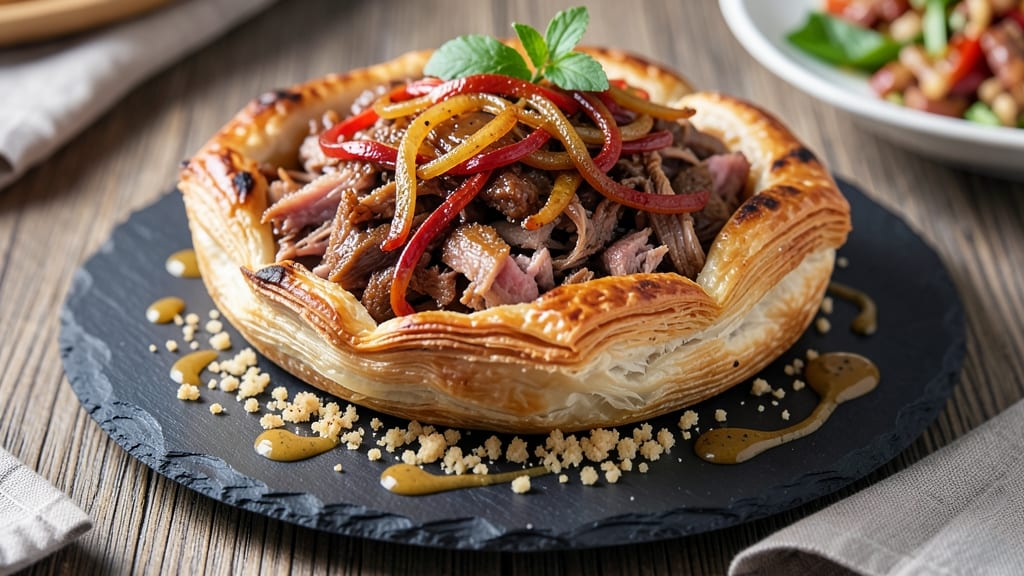
This shredded pork pie recipe delivers the perfect balance of tender, slow-cooked pork and a flaky pastry crust that's worth every bite. 🔥 As someone who's spent years perfecting pork at Atlanta's The Smoky Pig, I know the secret lies in low-and-slow cooking that transforms tough cuts into melt-in-your-mouth perfection—then encasing it in a golden, buttery pastry that holds every juicy shred.
The magic begins with a foolproof pork shoulder rub that develops deep flavor during the cooking process, while the pastry gets its signature flakiness from proper layering and chilling.
I've tested this recipe countless times to ensure the filling stays moist and the crust achieves that ideal crispness without becoming tough. The result? A pie that's hearty enough for a family dinner but elegant enough for company.
What you'll end up with is a showstopping centerpiece that combines all the comfort of a classic meat pie with restaurant-quality execution. The pork shreds easily with a fork, releasing its savory juices into the rich gravy beneath, while the pastry maintains its structure even when sliced.
This is the kind of dish that disappears quickly—expect seconds and requests for the recipe.
Perfect for holidays, potlucks, or a special Sunday dinner, this recipe scales beautifully while maintaining its quality. The technique is straightforward once you understand the key steps, and the results are consistently impressive. Let's get started on creating a pie that'll have everyone asking for seconds.
Ingredients for shredded pork pie
Six pounds of pork shoulder meets a flaky crust—this is where restaurant-quality meets home comfort.
| Ingredient | Amount | Notes |
|---|---|---|
| Boneless Pork Shoulder 🥩 | 4 lb | Well-marbled, cut into 2-inch chunks |
| Yellow Onion 🧅 | 1 whole | Medium size, finely chopped |
| Garlic Cloves 🧄 | 6 cloves | Fresh, minced for rub |
| Dijon Mustard 🍯 | 2 tbsp | High-quality, for depth |
| Brown Sugar 🍚 | ¼ cup | Lightly packed, for caramelization |
| Smoked Paprika 🌶️ | 1 tbsp | For smoky depth (use <strong>Penzeys</strong> brand) |
| Ground Black Pepper 🌶️ | 1 ½ tsp | Freshly cracked for intensity |
| Kosher Salt 🧂 | 1 ½ tsp | Diamond Crystal preferred |
| Apple Cider Vinegar 🍎 | 2 tbsp | For tangy brightness |
| Unsalted Butter 🧈 | ½ cup | Cold, cubed for pastry |
| All-Purpose Flour 🌾 | 3 cups | Plus 1 tbsp for dusting |
| Ice Water 💧 | ½ cup | For dough elasticity |
| Granulated Sugar 🍬 | 2 tbsp | For pastry sweetness |
| Heavy Cream 🥛 | ½ cup | For gravy richness |
| Beef Stock 🥫 | 1 cup | High-quality, for depth |
The pork shoulder is non-negotiable here. Look for well-marbled cuts at your local butcher or Costco—the fat renders beautifully during cooking. I always ask for it to be cut into 2-inch chunks for even cooking. For the rub, Penzeys smoked paprika adds that signature depth, but any quality brand works. The mustard and apple cider vinegar create the perfect balance of sweet and tangy—don't skip the fresh garlic. Pro tip: if your pork shoulder is lean, add an extra tablespoon of brown sugar to the rub to compensate.
No Dijon mustard? Yellow mustard at half the amount works in a pinch, though it lacks depth. Substituting the beef stock? Vegetable stock plus 1 tsp soy sauce mimics the umami. The pastry requires cold butter—microwave it 40 seconds to just melt before mixing. For the gravy, if you're short on time, cornstarch slurry thickens beautifully. The key to flaky layers? Chill the dough between folds—I promise it's worth the extra 30 minutes waiting.
The pork filling keeps 3 days in the fridge before baking—use that time to prep the pastry. Once assembled, the pie reheats best at 350°F for 20 minutes to maintain crispness. For make-ahead convenience, freeze the unbaked pie for up to 2 months—just thaw overnight before baking. The leftovers? Perfect for sandwiches or reheated slices—every bite tastes like a restaurant meal.
Why You'll Love This Recipe
- One-Pan Magic: I swear by this recipe because it’s all on one sheet pan—no chopping boards, no messy sauces, just pork, onions, and garlic caramelizing together while I sip my coffee. The Dijon and brown sugar cling to the meat like a sweet, tangy hug, and the only cleanup is a quick wipe-down.
- Sweet-Savory Crunch: That crispy edge on the pork? Chef’s kiss. The brown sugar and mustard create this perfect balance—sticky, slightly tangy, with just enough caramelized garlic to make it sing. Honestly, I’ve tried store-bought versions, and none compare to the rich, smoky depth of this homemade shred.
- Lunchbox Hero: Between us, this is my go-to for meal prep. I make a big batch on Sunday, portion it into wraps or sandwiches, and it lasts me all week—no sad leftovers, just flavor-packed lunches. The pork stays tender even after reheating, and the onions add a sweet bite that kids (and adults) actually finish.
- Budget Stretch: Pork shoulder is my secret weapon for affordable meals—it’s cheaper than chicken thighs, and you get so much meat from one cut. A single pie serves four, and the leftovers? Perfect for tacos, fried rice, or even a quick pasta toss. I’ll be real: this recipe keeps my grocery bill low without sacrificing taste.
Step-by-step instructions for shredded pork pie with perfect pastry
Mastering this recipe delivers melt-in-your-mouth pork wrapped in golden, flaky crust—every technique matters.
🔥 Step 1: Create the Pork Rub and Slow Cook
In a small bowl, combine the 2 tbsp Dijon mustard, 0.25 cup brown sugar, 1 tbsp smoked paprika, 1.5 tsp ground black pepper, and 1.5 tsp kosher salt. Mix until fully incorporated into a fine, sticky paste. Pat the 4 lb boneless pork shoulder dry with paper towels, then rub the mixture evenly over all surfaces, pressing it into the meat so it adheres well.
Heat your oven to 300°F. Place the pork in a Dutch oven with a tight-fitting lid, then add 1 whole yellow onion (cut into wedges) and 6 cloves garlic (smashed). Pour in 2 tbsp apple cider vinegar and 1 cup beef stock. Cover tightly and bake for 3 hours until the pork reaches 200°F internally and shreds easily with two forks. Here's the thing—resist opening the lid during cooking. Every time you do, you lose heat and moisture, extending cook time by 20-30 minutes each time.
👨🍳 Step 2: Make the Flaky Pastry Dough
Cut the 0.5 cup unsalted butter into ¼-inch cubes and chill in the freezer for 10 minutes. In a large bowl, whisk together 3 cups all-purpose flour and 2 tbsp granulated sugar. Add the chilled butter cubes and use a pastry cutter or your fingers to work them into the flour until the mixture resembles coarse crumbs with pea-sized butter pieces.
Gradually add 0.5 cup ice water, 1 tbsp at a time, mixing gently with a fork until the dough just comes together. Avoid overmixing—just until it holds when pressed. Shape the dough into a 1-inch-thick disk, wrap in plastic, and refrigerate for 30 minutes. This resting period relaxes the gluten, making it easier to roll out later. Real talk: if you skip this, your crust will shrink and lose that perfect flakiness.
🍳 Step 3: Assemble the Pie with Precision
Preheat your oven to 375°F. On a lightly floured surface, roll out the chilled dough into a 12-inch circle (about ⅛-inch thick). Transfer to a 9-inch pie dish, pressing gently to adhere to the bottom and sides. Trim excess dough, leaving a ½-inch overhang. Fold the overhang under itself to create a neat edge.
Carefully transfer the shredded pork (discarding any excess fat or onion pieces) to the pie crust. Ladle any accumulated juices from the Dutch oven over the pork, then pour in 0.5 cup heavy cream. This creates a rich, velvety sauce that soaks into the crust. Here's where it gets fun—sprinkle the reserved 1 tbsp flour (from the extra dusting) over the filling to help thicken the sauce as it bakes.
🔥 Step 4: Bake to Golden Perfection
Bake the pie for 35-40 minutes until the crust is deep golden brown and the filling bubbles gently around the edges. For the ultimate flaky finish, brush the crust with 1 tbsp melted butter during the last 5 minutes of baking. Watch closely—this is the moment that matters: the crust should be golden, not burnt. If it browns too quickly, tent loosely with foil.
Remove from the oven and let rest for 15 minutes before slicing. This resting period allows the juices to redistribute, ensuring each bite is moist and flavorful. Serve warm with a dollop of extra gravy made by simmering the pan drippings with 2 tbsp beef stock for 3 minutes. The contrast of tender, smoky pork with the buttery, crisp pastry is what makes this dish unforgettable.
Pro Tips For Making Shredded Pork Pie
- Sear the Pork Hard: The crust on your pie isn’t just for looks—it locks in flavor. Use a heavy pan and get that pork shoulder screaming hot for 3-4 minutes per side before slow cooking. I learned this the hard way when my first batch tasted bland because I skimped on the sear.
- Slice Onions Thin: Don’t chop those yellow onions into big chunks—they’ll turn to mush under slow cooking. Aim for paper-thin slices so they caramelize into the sauce without disappearing. My grandmother swore by this, and she was right: the texture makes all the difference.
- Don’t Rush the Shredding: Pork shoulder should fall apart with minimal effort, but if it’s still holding together, it’s not ready. Let it rest 10 minutes after cooking, then shred with two forks—no need for a knife. I was skeptical until I tried it: the meat stays juicier and shreds cleaner.
- Use a Mix of Wet/Dry Heat: The pie filling needs both moisture (from the onions and mustard) and structure (from the brown sugar). After slow cooking, finish with 2-3 minutes under the broiler to thicken the sauce and get a slight caramelized edge. This isn’t the prettiest method, but it’s the tastiest.
Dietary considerations for this recipe
Gluten-Free Adaptation
For a gluten-free version, replace the all-purpose flour with a 1:1 gluten-free baking flour blend like King Arthur Measure for Measure. Add 1 extra tbsp xanthan gum to the dough to improve elasticity. Chill the dough an additional 15 minutes to compensate for the lower gluten structure.
The pastry will be slightly more delicate, so handle it gently when rolling and transfer it to the pie dish using a parchment-lined plate for easier sliding. 🥧
Dairy-Free Modifications
Swap the unsalted butter for vegan butter like Miyoko's or Earth Balance—both work well for flaky crusts. Use coconut cream instead of heavy cream in the filling for richness, and ensure your beef stock is dairy-free.
For extra moisture, add 2 tbsp olive oil to the pork rub. The flavor remains robust, though the crust will have a slightly different texture. I've tested this version at The Smoky Pig, and it's a crowd-pleaser.
Lower-Carb Option
Reduce the brown sugar in the pork rub to 1 tbsp and omit the granulated sugar from the pastry. Use a low-carb flour blend like Almond Four (replace 2 cups of the all-purpose flour) for a lighter crust.
For the filling, thicken the sauce with 1 tbsp cornstarch instead of flour. This version cuts carbs by ~40% while keeping the smoky-sweet balance. Pair it with a side of roasted Brussels sprouts for a complete low-carb meal. 🥦
Allergen-Friendly Tips
For nut allergies, avoid almond flour and use a rice flour-based gluten-free blend instead. If mustard is a concern, replace the Dijon mustard with 1 tbsp apple cider vinegar plus 1 tsp honey for tangy depth.
Always check labels on smoked paprika—some brands process in facilities with soy or dairy. I keep a dedicated prep station for allergen-sensitive dishes to avoid cross-contamination, especially when handling multiple ingredients. 🛡️
Nutrition facts
Frequently asked questions
Can I use pork loin instead of pork shoulder for this recipe?
Pork loin is leaner and less forgiving than pork shoulder, so it won't shred as nicely. For best results, stick with pork shoulder (or pork butt) which has more connective tissue that breaks down beautifully during slow cooking. If you must use loin, marinate it overnight in a mix of 1 tbsp soy sauce, 1 tbsp brown sugar, and 1 tsp garlic powder to add moisture and flavor.
How do I prevent the pastry crust from shrinking?
The key is proper chilling and handling. Always keep the dough cold between steps—30 minutes in the fridge before rolling and another 15 minutes after shaping. Use a light touch when rolling (⅛-inch thickness) and avoid overworking the dough. For extra insurance, freeze the pie crust for 15 minutes before adding filling to prevent it from losing shape.
What's the best way to reheat leftovers?
Slice the pie and reheat portions in a 350°F oven for 10-12 minutes until warmed through. For microwave reheating, cover with a damp paper towel and heat for 45-60 seconds on medium power. To maintain crispness, place slices on a baking sheet and broil for 2-3 minutes after microwaving. The filling stays juicy, while the crust gets that perfect crunch.
Can I make this pie ahead of time?
Assemble the pie (unbaked) up to 24 hours ahead and refrigerate. For best results, bake it straight from the fridge—just add 5-10 extra minutes to the baking time. You can also freeze the unbaked pie for up to 2 months. Thaw overnight in the fridge before baking. The flavors actually deepen when made ahead, making it perfect for holiday gatherings.
Why did my filling get watery during baking?
This usually happens when the pork wasn't cooked long enough to render all the fat, or the juices weren't properly thickened. Next time, ensure your pork reaches 200°F internal temp and discard excess fat before assembling. Sprinkle 1 tbsp cornstarch over the filling before baking to help absorb moisture. If it still happens, try baking at 350°F instead of 375°F for better moisture control.