
Desserts
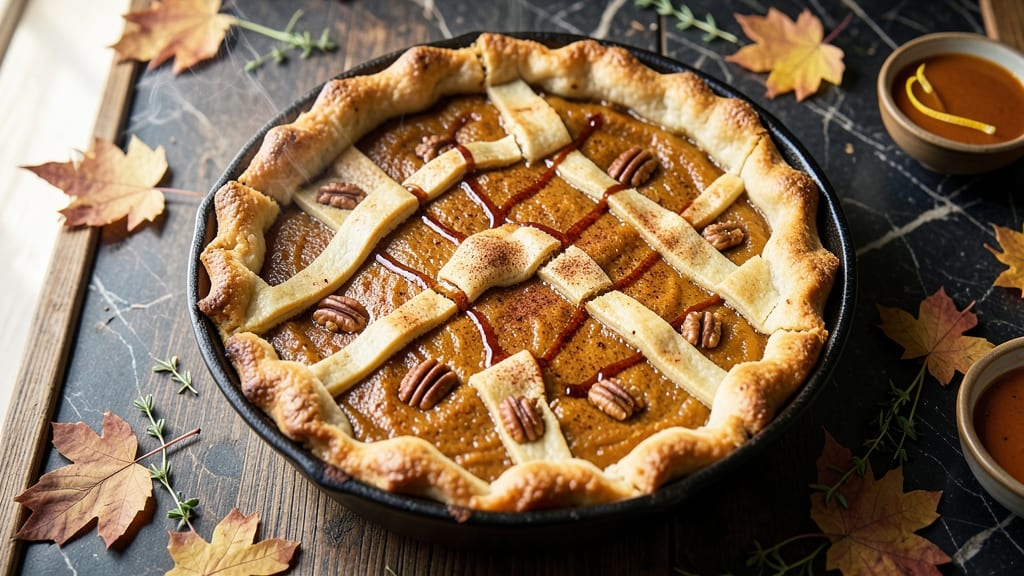
This 18th-century pumpkin pie recipe transports you straight to a colonial-era kitchen, where spiced rum and molasses replaced modern shortcuts. The filling—thickened with eggs and enriched with warm spices—was traditionally baked in a simple crust, then sealed with foil to preserve its moisture.
What makes this version special is the historical authenticity: no refined sugar, no pie weights, just the kind of rustic techniques that defined early American desserts.
The crust, made with lard and flour, achieves a tender, flaky texture without butter, while the filling gets its depth from a blend of nutmeg, cinnamon, and a splash of spiced rum—common ingredients in 18th-century pantries.
The pie’s slow bake ensures a creamy, custard-like center that was prized long before modern ovens. This isn’t just a dessert; it’s a taste of history, recreated with care to honor the methods of our ancestors.
By the time it emerges from the oven, you’ll have a pie with a golden, slightly cracked crust and a filling so rich it practically melts in your mouth. The rum infusion adds a subtle warmth, balancing the natural sweetness of the pumpkin without overpowering it.
Serve it with whipped cream or a dollop of clotted cream—just as they might have in a colonial dining room.
Perfect for Thanksgiving, harvest feasts, or any occasion calling for a dessert with depth and tradition. The techniques are straightforward, but the result is anything but ordinary. Let’s bring this piece of history to life.
Ingredients for 18th century pumpkin pie
Colonial pantry staples and a splash of history—this pie brings 18th-century flavors to life.
| Ingredient | Amount | Notes |
|---|---|---|
| Fresh Pumpkin Puree 🎃 | 2 cups | Unsweetened, canned or homemade |
| Large Eggs 🥚 | 4 whole | Room temperature for even baking |
| Dark Brown Sugar 🍯 | 1 cup | Packed, no refined white sugar |
| Molasses 🍯 | ½ cup | Unsulphured for authentic flavor |
| Spiced Rum 🍹 | ¼ cup | 18th-century style, 40% ABV |
| Ground Cinnamon 🌿 | 2 tsp | Freshly ground preferred |
| Ground Nutmeg 🌿 | 1 tsp | Freshly grated nutmeg best |
| Ground Ginger 🌿 | 1 tsp | Freshly ground for warmth |
| Salt 🧂 | ½ tsp | Diamond Crystal preferred |
| All-Purpose Flour 🌾 | 2 cups | For crust, sifted for lightness |
| Lard 🧈 | 1 cup | Leaf or leaf lard preferred |
| Ice Water 💧 | ½ cup | For dough handling |
| Aluminum Foil 📄 | 1 sheet | Heavy-duty for sealing |
The pumpkin and spices are your anchors here. Canned pumpkin puree works fine (just drain it well), but homemade is richer—roast sugar pumpkins until tender, then mash. For the spices, Penzeys or local spice shops carry authentic ground cinnamon and nutmeg that haven’t lost their punch. The molasses? Gothic or Brer Rabbit unsulphured is perfect—avoid sulphured, which tastes harsh. As for the rum, Appleton Estate or Gosling’s Black Seal are excellent choices, but any aged rum will do. Skip the flavored stuff—this is about pure spice and warmth.
No spiced rum? Extra molasses plus a splash of bourbon gets you close, though rum’s depth is unmatched. Fresh nutmeg is a game-changer—grate it yourself for that bright, citrusy kick. The lard is non-negotiable for that classic flaky crust (no butter here!). If you’re avoiding lard, vegetable shortening works in a pinch, but it’ll lack that colonial richness. For the crust, chilled dough is key—work quickly and keep everything cold. The foil sealing? Don’t skip it—it keeps the filling moist just like our ancestors did.
Store the crust dough between parchment in the fridge for up to 2 days—it’s easier to handle cold. The filling can be prepped ahead and refrigerated for 1 day, but bake it fresh for the best texture. Once baked, the pie keeps 3-4 days at room temperature (thanks to that foil seal) or 1 week refrigerated. For serving, let it rest 1 hour—the filling sets up beautifully. Leftovers? Reheat gently in a 350°F oven with fresh foil to keep it moist.
Why You'll Love This Recipe
- No Fuss Assembly: I’ll be real—this pie comes together faster than my usual holiday stress spiral. Just whisk eggs, fold in pumpkin puree, and stir in that molasses and spiced rum like you’re mixing a cocktail. No rolling dough, no blind baking, no waiting for crusts to chill.
- Molasses-Rum Magic: That dark brown sugar and molasses combo? It’s like a warm hug for your taste buds, especially when the spiced rum cuts through the sweetness. Honestly, the first bite tastes like autumn in a glass—rich, deep, and just a little mysterious.
- Crowd-Pleaser Any Day: Between us, this pie works at Thanksgiving and when I’m craving dessert on a Tuesday. Serve it with vanilla ice cream for a fancy touch, or eat it straight from the pan when I’m too tired to slice. My book club friends now ask for it every fall.
- Leftovers That Last: The filling thickens beautifully after baking, so it reheats like a dream—just a quick zap in the microwave or warmed in the oven. I’ve even packed it for lunches; the spices keep it interesting, and the molasses adds a caramelized sweetness that never gets old.
Step-by-step instructions for 18th century pumpkin pie
Here's how to craft an authentic colonial-era pie with a rum-spiked filling and foolproof foil crust.
Prepare the Foil-Sealed Crust
Cut the 1 sheet aluminum foil into two 9-inch circles using a pie dish as your guide. This creates the base and top crust without traditional rolling. In a large bowl, combine the 2 cups all-purpose flour, 1 cup lard, and 0.5 tsp salt. Cut the cold lard into the flour using a pastry cutter or two forks until the mixture resembles coarse crumbs with pea-sized fat pieces.
Gradually add the 0.5 cup ice water, one tablespoon at a time, mixing gently with a fork until the dough just comes together. Avoid overworking - the dough should hold when pressed but still feel slightly crumbly. Divide the dough evenly between the two foil circles, pressing firmly to create a ¼-inch thick crust in each. Chill both crusts for 30 minutes while you prepare the filling.
Mix the Spiced Rum Filling
In a large mixing bowl, whisk together the 2 cups fresh pumpkin puree, 1 cup dark brown sugar, 0.5 cup molasses, and 0.25 cup spiced rum. The rum adds depth that modern recipes often miss - you'll smell that warm, caramel-like aroma immediately. In a separate small bowl, combine the 2 tsp ground cinnamon, 1 tsp ground nutmeg, 1 tsp ground ginger, and remaining 0.5 tsp salt. Whisk these spices into the pumpkin mixture until fully dissolved.
Add the 4 whole large eggs, one at a time, whisking vigorously after each addition. The batter should be thick but pourable - similar to heavy pudding. Here's the thing: don't worry if it looks curdled at first. The heat from baking will smooth everything out beautifully. Taste and adjust sweetness if needed - the molasses provides natural sweetness that balances the spices.
Assemble the Pie
Preheat your oven to 375°F. Remove one chilled foil crust from the refrigerator and place it in a 9-inch pie dish. Pour the filling into the crust, spreading it evenly to within ½ inch of the edges. This prevents overflow during baking. Place the second foil crust on top, pressing gently to seal the edges. Use your fingers to crimp the foil edges together, creating a tight seal.
Here's where the foil magic happens: cut 4 small slits in the top crust to allow steam to escape. Place the assembled pie on a baking sheet (to catch any potential drips) and bake for 50-55 minutes. The pie is done when the filling is set but still slightly jiggly in the center, and the foil edges are golden brown. The rum will evaporate slightly, leaving behind its signature warmth.
Cool and Serve
Remove the pie from the oven and let it cool completely on a wire rack - at least 2 hours. This gradual cooling prevents the filling from cracking as it sets. The foil crust will maintain its shape beautifully while the filling develops its signature creamy texture. For serving, gently peel back the foil from one edge to reveal the golden crust underneath.
Slice into wedges using a sharp knife, wiping the blade between cuts to ensure clean slices. Each bite should deliver a perfect balance of spiced pumpkin, molasses sweetness, and that subtle rum warmth. The crust remains tender rather than flaky - a hallmark of 18th-century baking techniques. Serve with whipped cream or a dollop of clotted cream for an authentic colonial presentation.
Pro Tips For Making 18th Century Pumpkin Pie
- STRAIN THE PUREE: Skip the watery mess—after roasting your pumpkin, squeeze it through a fine-mesh sieve or cheesecloth to remove every last bit of stringy fiber. I learned this the hard way when my pie filling turned out grainy, no matter how much I stirred. Takes 10 minutes now, saves you from regret later.
- WHISK EGGS COLD: Add the eggs to the warm pumpkin mixture after cooling it to room temperature, then whisk them in gently. I used to dump in cold eggs straight from the fridge, and the filling would curdle like a science experiment gone wrong. Let the pumpkin sit for 15 minutes first—your future pie will thank you.
- DON’T SKIP THE RUM SOAK: Pour the spiced rum over the crust before adding the filling and let it sit for 5 minutes—this keeps the bottom from getting soggy. Sounds weird, but it works: the alcohol evaporates during baking, leaving behind just enough depth to balance the molasses. (Yes, even if you’re impatient like me.)
- BAKE LOW AND SLOW: Set your oven to 325°F (not 350°F) and bake for 50–60 minutes until the center just wobbles like a firm custard. After burning three batches at higher heat, I finally realized this pie needs time to set properly—rushing it turns the filling into a rubbery mess. A toothpick should come out with moist crumbs, not liquid.
Dietary considerations for this dish
18th-Century Dietary Limits
Colonial cooks relied on what was available in their pantries—no refined sugar, no butter, and no modern baking aids. This pie uses molasses and dark brown sugar instead of white sugar, and lard instead of butter, reflecting the limited ingredients of the era.
The spices—cinnamon, nutmeg, and ginger—were expensive luxuries, so they were used sparingly but intentionally. 🌿
Vegetarian-Friendly Adaptations
This recipe is naturally vegetarian, as it contains no meat or animal byproducts beyond eggs and dairy (if using clotted cream). The lard crust can be swapped for vegetable shortening if you prefer, though it won’t have the same rich, flaky texture.
For a vegan version, replace the eggs with 4 tablespoons aquafaba (chickpea brine) or a flaxseed "egg" (1 tablespoon ground flaxseed + 3 tablespoons water per egg).
Gluten-Free Considerations
To make this pie gluten-free, replace the all-purpose flour in the crust with a 1:1 gluten-free flour blend like Bob’s Red Mill or King Arthur. Add ½ teaspoon xanthan gum to help bind the dough.
The filling remains unchanged, as it doesn’t contain gluten. Test the crust’s texture—it may need an extra 1-2 tablespoons ice water to hold together properly. 💡
Allergen Awareness
This recipe contains eggs and dairy (if serving with clotted cream), so it’s not safe for those with severe allergies. For an egg-free filling, use 4 tablespoons cornstarch mixed with 2 tablespoons cold water as a thickener, added to the pumpkin mixture before baking.
Always check labels on molasses and spices for potential cross-contamination warnings if allergies are a concern.
Modern Shortcuts
If you’re short on time, you can use pre-made pie crust (just seal it with foil as directed), though it won’t have that authentic colonial texture. For the filling, canned pumpkin puree works perfectly—just drain it well to avoid excess moisture.
Skip the rum if you prefer, but the molasses and spices will still deliver that warm, spiced flavor. The foil sealing technique, however, is non-negotiable for that historic moisture retention! 📄
Nutrition facts
Frequently asked questions
Why does this recipe use molasses instead of sugar?
Molasses was a primary sweetener in the 18th century because refined sugar was expensive and imported. It adds deep caramel notes and balances the spices beautifully. The recipe uses ½ cup molasses plus 1 cup brown sugar to replicate that colonial sweetness profile without overpowering the pumpkin.
Can I make this pie without rum?
Yes! Replace the ¼ cup spiced rum with either ¼ cup bourbon or an extra 2 tablespoons molasses plus 1 teaspoon vanilla extract. The rum adds warmth and depth, but the spices will still shine. For a non-alcoholic version, use ¼ cup apple cider instead.
What's the purpose of the foil crust?
The foil creates a tender, sealed crust that was impossible with 18th-century baking techniques. It prevents the filling from overflowing and keeps the texture moist—just like our ancestors did! The slits allow steam to escape while maintaining that historic "foil-sealed" look.
How do I know when the pie is fully baked?
The pie is done when the filling is set but still slightly jiggly in the center (like 2 minutes after the edges pull away from the pan), and the foil edges are golden brown. A toothpick inserted should come out with moist crumbs—not wet batter. Overbaking dries out the filling!
Can I make this ahead for Thanksgiving?
Assemble the pie (unbaked) and refrigerate for up to 24 hours. Bake it 2 hours before serving to let flavors meld. For storage, keep it at room temperature (covered) for 3 days or refrigerate for 1 week. The foil seal preserves freshness!