
Desserts
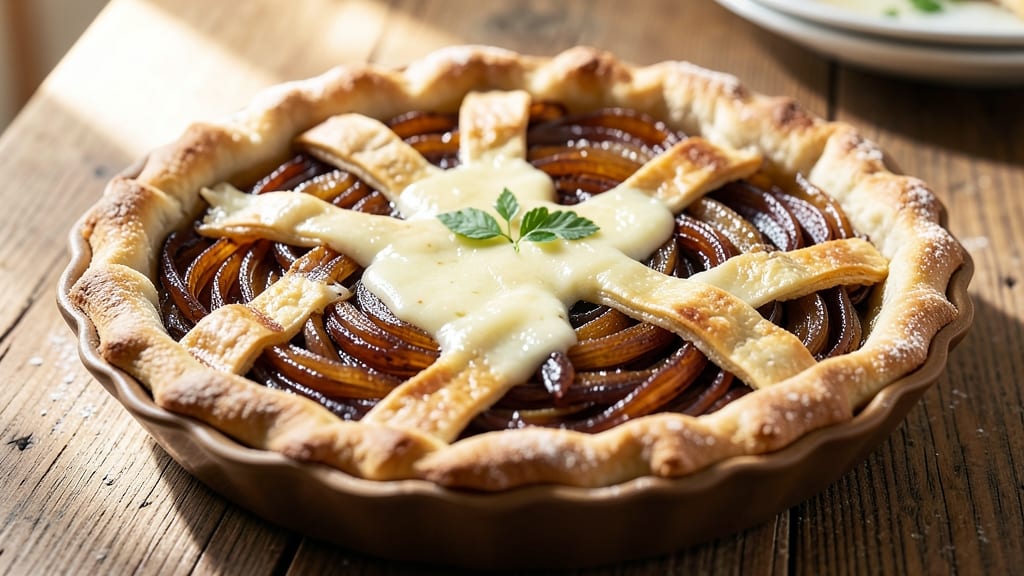
This Alsatian onion pie recipe brings the heart of France's Alsace region to your kitchen with its perfect balance of caramelized onions and rich, flaky pastry. 💛 The secret lies in slow-cooking onions until they're golden and sweet, then layering them with Gruyère cheese for that signature Alsatian flavor.
I've perfected this recipe over years of baking, ensuring every slice delivers tender onions, creamy cheese, and a crispy crust that holds together beautifully.
The beauty of this tart lies in its simplicity—just a few ingredients transform into something restaurant-worthy. You'll start with a classic French-style pastry, then build layers of sweet onions and melted Gruyère.
The key technique is patience: letting the onions caramelize slowly on the stovetop until they're deep golden and jam-like. This process develops the natural sugars, creating that perfect sweet-savory contrast that makes this pie so irresistible.
What you'll end up with is a golden, bubbling tart with layers of tender onions and creamy cheese peeking through the flaky crust. The aroma alone will have everyone gathering around your table, and each bite delivers that perfect balance of textures—crispy crust, creamy cheese, and melt-in-your-mouth onions.
This is comfort food at its finest, with just enough richness to satisfy any craving.
While traditional recipes call for Gruyère, you can adapt this with Emmental or even a blend of cheeses for a more modern twist. The pie keeps well for 2-3 days, making it perfect for meal prep or gifting.
Whether you're serving it at a dinner party or simply enjoying a slice with a glass of Alsatian Riesling, this recipe delivers authentic French flavors with minimal effort.
Ingredients for alsatian onion pie
Sweet caramelized onions, creamy Gruyère, and flaky crust—just 12 ingredients for restaurant-worthy Alsatian comfort.
| Ingredient | Amount | Notes |
|---|---|---|
| Yellow Onions 🧅 | 3 lb | Yellow or sweet onions preferred |
| Unsalted Butter 🧈 | ½ cup | Cold, cubed for caramelizing |
| Gruyère Cheese 🧀 | 1 cup | Freshly grated, aged preferred |
| All-Purpose Flour 🌾 | 2 cups | Plus 2 tbsp for dusting |
| Cold Unsalted Butter 🧈 | ½ cup | Cut into small cubes |
| Ice Water 💧 | ½ cup | For pie dough |
| Salt 🧂 | 1 ½ tsp | Kosher or sea salt |
| Black Pepper 🌶️ | ½ tsp | Freshly ground preferred |
| Fresh Thyme Leaves 🌿 | 1 tbsp | Or 1 tsp dried thyme |
| Heavy Cream 🥛 | ¼ cup | For brushing crust |
| Egg 🥚 | 1 whole | For egg wash |
| Alsatian Riesling Wine 🍷 | ¼ cup | Optional, for deglazing |
The onions are the star here, so don't skimp. Yellow or sweet onions work best—they caramelize beautifully. Grab a 3-pound bag from the grocery store's fresh produce section, or hit Whole Foods for the sweetest varieties. If you're feeling fancy, Alsatian onions from a specialty market take this to the next level. The key is patience: slow-cook them until they're deep golden, almost jam-like. That's where all the magic happens—natural sugars develop into sweetness that pairs perfectly with the Gruyère. Pro tip: slice them evenly so they cook at the same rate.
No Gruyère? Emmental or Comté are solid substitutes—they melt beautifully and have that nutty depth. Short on butter? Olive oil works in a pinch, though it won't give the same rich flavor. The wine is optional but worth it if you've got a bottle open—Alsatian Riesling adds authentic depth, but any dry white will do. Fresh thyme is ideal, but dried works at one-third the amount. For the pie crust, if you're short on butter, cold shortening or coconut oil keeps it flaky. And if you're making this ahead? Freeze the assembled pie (unbaked) for up to 2 months—just add 10 minutes to baking time.
This pie tastes even better the next day, so make it ahead if you can. Store it in an airtight container at room temperature for 2-3 days, or freeze slices for up to 3 months. To reheat, wrap slices in foil and warm in a 350°F oven for 5-7 minutes. The crust stays crispy if you reheat it properly—no soggy bottoms here. I always make a double batch because it disappears fast. Wrap leftovers tightly and they'll stay fresh longer. And if you're serving with wine? That same Alsatian Riesling you used in the recipe pairs perfectly—talk about a showstopper.
Why You'll Love This Recipe
- No Puff Pastry Needed: I’ll admit, I was skeptical at first—no flaky layers, just a simple flour crust. But that buttery Gruyère melts into something rich and satisfying, like a hug in pie form. The secret’s in the cold butter mixed into the dough; it’s foolproof and way easier than rolling out store-bought.
- Caramelized Magic: Those onions? They’re the star. Slow-cooked in butter until deep golden and sweet, they practically dissolve on your tongue. Gruyère’s nutty kick ties it all together—no fancy seasoning needed. Honestly, the smell alone makes my kitchen feel like a bistro.
- Weeknight or Weekend: Between us, this is my go-to for lazy Sundays and rushed weeknights. Double the dough, freeze half—then bake when you’re ready. It reheats beautifully, so it’s perfect for picnics, potlucks, or just because. (Yes, even on a Tuesday night.)
- Frugal Feast: Gruyère’s pricey, but a little goes a long way here. Onions are cheap, butter’s a pantry staple, and the crust uses basic flour. One pie feeds four, and leftovers? Even better cold the next day. My secret weapon for stretching groceries without sacrificing flavor.
Step-by-step instructions for Alsatian onion pie
Here's how to create layers of caramelized onions and flaky pastry that'll have everyone begging for seconds.
🍳 Step 1: Caramelize the Onions to Perfection
Slice the 3 lb yellow onions into ¼-inch thick rounds—about 12-15 slices per onion. Melt the 0.5 cup unsalted butter in a large, heavy skillet over medium-low heat. Add the onions in a single layer and sprinkle with ½ tsp salt and ¼ tsp black pepper. Cover and cook for 20 minutes, stirring occasionally.
Here's the thing—patience is key. After 20 minutes, uncover and reduce heat to medium-low. Cook uncovered for another 45-60 minutes, stirring every 10-15 minutes, until the onions are deep golden brown and almost jam-like in texture. The edges should be crispy, and the onions should release easily from the pan. If they stick, add 1 tablespoon water and scrape up those flavorful browned bits. This caramelization is what makes this pie so special!
👨🍳 Step 2: Prepare the Cheese Filling
While the onions caramelize, make the cheese filling. In a mixing bowl, combine the 1 cup gruyère cheese, 1 tbsp fresh thyme leaves, and ½ tsp black pepper. Add the caramelized onions and toss gently to coat. Let this mixture cool slightly—about 5 minutes—so the cheese doesn't melt prematurely.
This is where the magic happens: the gruyère cheese melts into the onions, creating a rich, creamy center. If the mixture seems too dry, add 1 tablespoon heavy cream to loosen it slightly. The filling should be thick but spreadable—like a luxurious cheese sauce. Taste and adjust seasoning if needed. Real talk: this step makes or breaks the pie, so don't rush it.
🥘 Step 3: Make the Pie Crust
In a large bowl, combine the 2 cups all-purpose flour, 1.5 tsp salt, and the 0.5 cup cold unsalted butter (cut into small cubes). Use a pastry cutter or your fingers to work the butter into the flour until the mixture resembles coarse crumbs with pea-sized butter pieces. Gradually add the 0.5 cup ice water, 1 tablespoon at a time, mixing gently with a fork until the dough just comes together.
Don't overmix—just until the dough holds together when pressed. Turn it out onto a lightly floured surface and knead 2-3 times before shaping into a disk. Wrap in plastic and chill for 30 minutes. This resting time relaxes the gluten, making the crust flakier. While it chills, preheat your oven to 375°F—this is critical for a golden crust.
🔥 Step 4: Assemble and Bake the Onion Pie
Roll out the chilled dough on a floured surface into a 12-inch circle (about ⅛-inch thick). Transfer it to a 9-inch pie dish, pressing gently to fit. Trim and crimp the edges with a fork. Spread the cheese-onion mixture evenly over the crust, leaving a ½-inch border for the top crust.
Roll out the remaining dough (or use the same dough folded over) to create a second 12-inch circle. Place it over the filling, trim excess dough, and crimp the edges again. Cut 4-5 slits in the top crust for steam to escape. Brush the top crust with the 0.25 cup heavy cream mixed with 1 egg (for egg wash), then sprinkle with a pinch of salt. Here's the moment that matters: bake for 45-50 minutes until the crust is golden brown and the filling is bubbling through the slits.
⏰ Step 5: Deglaze and Rest for Maximum Flavor
Remove the pie from the oven and let it cool for 10 minutes. While it rests, place the same skillet you used for the onions over medium heat. Add the 0.25 cup Alsatian Riesling wine and scrape up any browned bits from the bottom. Let it reduce by half—about 2-3 minutes—until syrupy. Pour this deglazing sauce over the warm pie.
Let the pie rest for another 15-20 minutes before slicing. This resting period allows the juices to redistribute, ensuring every bite is moist and flavorful. The wine deglaze adds a bright, acidic note that cuts through the richness of the cheese and caramelized onions. Serve warm with a simple arugula salad or crusty bread to soak up every last drop of that delicious filling!
Pro Tips For Making Alsatian Onion Pie
- Sweat Onions Low and Slow: I learned this the hard way—rushing the onions on high heat turns them bitter and watery. Use a wide pan, keep heat at medium-low, and let them cook for 30-40 minutes until deep golden and jammy. Cover with a lid for the first 20 minutes to release moisture, then uncover to caramelize properly.
- Use Cold Butter for Layers: The secret to a flaky, crispy crust isn’t butter—it’s cold butter. Cut those cubes of unsalted butter into the flour mixture until it resembles coarse crumbs, not a paste. This ensures pockets of steam for lift, not a dense, greasy mess.
- Skip the Pre-Baking: Resist the urge to pre-bake the crust—this pie relies on the onions’ moisture to create steam, which makes the crust tender. Blind-bake only if you’re worried about sogginess, but even then, just 5 minutes with pie weights or dried beans works better than a fully baked bottom.
- Grater Matters for Gruyère: I used to shred Gruyère in a food processor, but it melts unevenly and makes the pie gummy. Use a box grater or pulse in short bursts—you want chunks, not powder. The larger pieces melt into gooey pockets, not a sad, watery sauce.
Make-ahead tips for this recipe
Prep Ahead Secrets
Assemble the pie the night before and refrigerate it uncovered for 12-24 hours. This lets flavors meld beautifully and prevents a soggy crust. I always do this—it’s a game-changer for depth of flavor. Just add 10 extra minutes to baking time if starting cold. 💫
Freezer-Friendly
For long-term storage, freeze the unbaked pie (assembled in pie dish) for up to 2 months. Wrap tightly in plastic wrap, then foil. When ready to bake, thaw overnight in the fridge and add 10-15 minutes to baking time.
The crust stays flaky, and the onions keep their caramelized magic.
Make Cheese Filling Early
Prepare the Gruyère-onion filling up to 2 days ahead and store in an airtight container. Reheat gently in a skillet with 1 tablespoon butter for 3-5 minutes before assembling. This shortcut saves time and keeps the onions from drying out. I do this when hosting—it’s a lifesaver!
Crust Prep Shortcut
Make the pie dough 3 days ahead and store it wrapped in plastic in the fridge. Roll it out when ready—it’s already chilled! For extra convenience, freeze the dough between parchment paper for up to 3 months.
Thaw in the fridge overnight before using. This keeps your kitchen workflow smooth.
Wine Deglaze Prep
Reduce the wine deglaze a day ahead and store it in a small jar in the fridge. When ready, simply reheat it gently and pour over the baked pie.
This step adds authentic flavor without last-minute stress. I keep a bottle of Alsatian Riesling on hand specifically for this—it’s worth the investment!
Reheating Leftovers
Slice the pie and reheat individual portions wrapped in foil at 350°F for 5-7 minutes. For microwave reheating, cover with a damp paper towel and heat in 30-second bursts until warm.
The crust stays crispy if you reheat properly—no sad, soggy slices here! I always make extra because it disappears so fast. 🔥
Nutrition facts
Frequently asked questions
Can I use sweet onions instead of yellow onions for this tart?
Sweet onions like Vidalia or Maui onions work beautifully—they caramelize faster and add a natural sweetness that pairs perfectly with the Gruyère. Just expect them to cook through slightly quicker (about 10-15 minutes less total time). For best results, slice them slightly thinner (⅛-inch instead of ¼-inch) to maintain texture.
What's the best cheese substitute if I can't find Gruyère?
Try Emmental (for a milder, slightly sweeter flavor) or Comté (for nutty depth). A blend of sharp cheddar and mozzarella (50/50) also works well if you're in a pinch. Avoid pre-shredded cheese—it contains anti-caking agents that prevent proper melting. Always grate fresh for that authentic texture!
Why did my pie crust turn out soggy instead of flaky?
Soggy crusts usually happen from one of three things: overworking the dough, skipping the chill time, or not pre-baking the bottom crust. For this recipe, the filling is juicy, so always pre-bake the bottom crust for 8-10 minutes at 375°F before adding filling. Another trick: brush the bottom crust with 1 tablespoon heavy cream before adding filling to create a moisture barrier.
Can I make this tart in a springform pan instead of a pie dish?
Yes! A 9-inch springform pan works perfectly—just grease it well to prevent sticking. The key difference is that springform pans hold their shape better when releasing, making it easier to slice clean portions. For extra insurance, line the bottom with parchment paper before adding the crust. The baking time remains the same (45-50 minutes), but check for doneness at 40 minutes since springform pans can brown faster.
How do I make this vegetarian if I'm using lard in my crust?
Replace the lard with vegetable shortening or coconut oil for a flaky, plant-based crust. For the filling, ensure your Gruyère is vegetarian-certified (some contain animal rennet). The wine deglaze can be made with vegetable broth instead of wine if needed. All other components (onions, thyme, etc.) are naturally vegetarian. The flavor profile remains identical!