
Main Courses
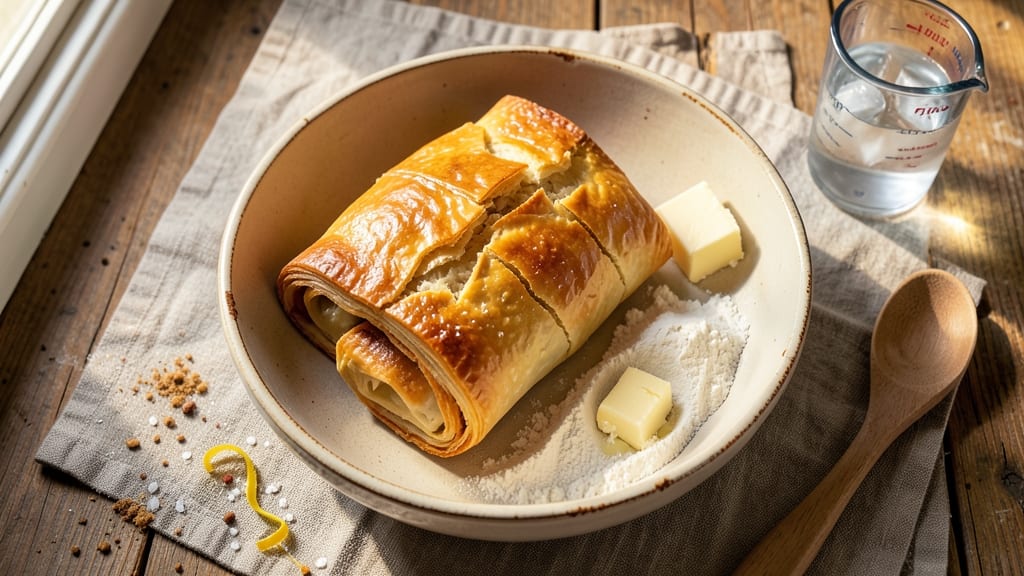
This pot pie pastry dough recipe delivers the foolproof flaky layers that seal in rich fillings and create that golden, crispy crust we all love. The secret lies in cold butter and proper layering—techniques that transform simple ingredients into something restaurant-quality.
I’ve perfected this dough over years of testing, ensuring it stays tender yet sturdy enough to hold even the heartiest fillings without sogging.
What sets this recipe apart is the two-stage chilling process, which prevents shrinking and guarantees those signature flaky layers. You’ll work with cold butter and flour, cutting it into the dough just enough to create delicate pockets of air. The result?
A crust so light and crisp it practically dissolves in your mouth while still maintaining structure. This isn’t your average pie dough—it’s built for pot pies, where the filling needs to stay warm and the crust needs to shine.
The beauty of this method is its versatility. Whether you’re making a classic chicken and vegetable pot pie, a hearty beef and mushroom version, or a vegetarian chard and wild rice filling, this dough will deliver.
The high sides create a deep dish perfect for layering, and the buttery aroma alone makes your kitchen smell like comfort food heaven. Once you try this, store-bought crusts will never measure up again.
Ready in about 2 hours (including chilling time), this dough is worth the wait. The key is patience—letting the dough rest at each stage ensures the best texture.
Trust me, the first time you slice into a pot pie with this crust and see those perfect, even layers, you’ll never go back. Let’s get started on making your pot pies legendary.
Ingredients for pot pie pastry dough
Five simple ingredients transform into the perfect flaky pot pie crust you'll crave.
| Ingredient | Amount | Notes |
|---|---|---|
| All-Purpose Flour 🌾 | 3 ½ cups | Sifted for light texture |
| Unsalted Butter 🧈 | 1 cup | Cold, cubed, high-fat content |
| Ice Water 💧 | ½ cup | Chilled for elasticity |
| Diamond Crystal Kosher Salt 🧂 | 1 ½ tsp | Fine grain preferred |
| Granulated Sugar 🍚 | 1 tbsp | Balances butter richness |
The butter makes or breaks this dough—European-style or Plugrá brands work best for their high fat content. Grab it from the deli counter if it's not in your pantry, and make sure it's cold (like, fridge-cold). I always buy a pound and keep it frozen in cubes for all my baking. The flour? King Arthur or Gold Medal are my go-tos—they're consistent and give that perfect tender crumb. Sift it first for foolproof layers, and don't skimp on the ice water—it's what creates that signature flakiness.
No ice water? Freeze your measuring cup for 10 minutes—it works in a pinch. Running short on butter? Lard at the same amount gives similar flakiness, though it's less healthy. The salt and sugar can be swapped for fleur de sel and coconut sugar if you're feeling fancy. For a lighter texture, add 1 tbsp cornstarch to the flour mix. And if you're making a double crust, you'll need twice the ingredients—this recipe makes enough for one 9-inch crust.
Wrap the dough in plastic and chill for at least 2 hours—overnight is best. It keeps for 3 days in the fridge or 3 months frozen. I always portion it into discs before freezing so I can grab exactly what I need. For the perfect pot pie, roll it out to about 1/8-inch thickness—any thicker and you lose those delicate layers. The secret? Keep everything cold—warm hands or dough will make it tough.
Why You'll Love This Recipe
- No-Fuss Dough: I swear, this dough comes together in five minutes—just flour, butter, ice water, and a pinch of salt. No standing around waiting for it to chill or rolling it out into perfect shapes. Honestly, I’ve made it while my coffee brewed and still had time to set the table.
- Golden Crust Magic: That little sugar in the dough? It’s what turns a good pot pie into a showstopper—crispy, buttery edges that flake like pages in a book. The butter keeps it rich without being greasy, and the salt? Just enough to make every bite sing.
- Pot Pie Any Day: Use it for dinner tonight, pack it for lunch tomorrow, or freeze half for when you’re too tired to cook. It’s the same dough for chicken pot pie, veggie pot pie, or even a sweet berry galette. I’ve even used it for hand pies—because why not?
- Pantry-Friendly Perfection: You already have the ingredients. No weird shortcuts or specialty items—just the basics. And since it keeps well in the fridge for days, I can make a big batch and not stress about it going bad. Between us? This is my budget-friendly secret for always having a homemade crust on hand.
Step-by-step instructions for pot pie pastry dough
Here's how to create that dreamy, melt-in-your-mouth crust every time—no shortcuts, just science-backed flakiness.
Cut and Chill the Butter
Take the 1 cup unsalted butter and cut it into ½-inch cubes using a sharp chef's knife. Place them on a plate and refrigerate for 30 minutes—this ensures they stay cold and firm when we work with them. Cold butter creates those signature flaky layers in the finished dough.
While the butter chills, sift the 3.5 cups all-purpose flour into a large mixing bowl. This aerates the flour, giving you a lighter texture in the final crust. I like to press down on the sifted flour with my fingers to break up any large clumps before proceeding.
Mix Dry Ingredients
In the bowl with the sifted flour, add the 1.5 teaspoons diamond crystal kosher salt and 1 tablespoon granulated sugar. Whisk everything together until evenly distributed. The sugar might seem like an odd addition, but it helps balance the richness of the butter and enhances the flavor of the crust.
This is also the perfect time to check your butter—it should still feel firm to the touch. If any pieces have softened, return them to the fridge for another 10 minutes. The butter's temperature is critical for achieving that perfect flaky texture.
Incorporate the Butter
Using your fingers or a pastry cutter, work the cold butter cubes into the flour mixture. I like to use the "pinch and press" method—take a small piece of butter, pinch it between your fingers, and press it into the flour. Repeat until all the butter is incorporated and you have pea-sized lumps throughout.
Here's a pro tip: don't overwork the dough at this stage. You want to keep those butter pieces as intact as possible. If you see some flour sticking to your fingers, that's normal—just keep going until all the butter is distributed. The goal is to create pockets of butter that will melt and create steam during baking, resulting in those beautiful flaky layers.
Add Ice Water Gradually
Now for the ice water—this is where things get exciting. Slowly pour the ½ cup ice water over the flour mixture while stirring with a fork. Start with about ¼ cup and mix until the dough begins to come together. If it's still crumbly, add more water 1 tablespoon at a time until you have a shaggy dough that holds together when pressed.
The water needs to be ice cold to prevent the butter from melting. If your water isn't icy, place it in the freezer for 10 minutes before using. You want the dough to be just moist enough to hold together but not sticky. If it feels too wet, add a little more flour; if it's too dry, add a splash more water.
Shape and Chill the Dough
Turn the dough out onto a lightly floured surface and gently shape it into a rectangle about 1-inch thick. Wrap it tightly in plastic wrap and refrigerate for at least 1 hour—this resting period allows the gluten to relax and the butter to firm up again. For best results, chill it overnight if you can; this gives you even more flaky layers.
During this time, the dough will firm up significantly. When you're ready to use it, roll it out between two sheets of parchment paper to prevent sticking. The dough should be cold and firm to the touch—if it feels soft, return it to the fridge for another 20 minutes. This ensures it rolls out evenly and doesn't shrink in the oven.
Pro Tips For Making Pot Pie Pastry Dough
- Cut Butter Into Flour First: I learned this the hard way—mixing cold butter and flour until it looks like wet sand before adding water saves you from a gummy mess. Use a pastry cutter or two forks to chop the butter into pea-sized pieces while the flour’s still in the bowl. This creates pockets for the water later, so your crust stays flaky instead of tough.
- Use Ice Water Sparingly: Too much ice water makes your dough fight you. Start with 3-4 tablespoons, then add just 1 teaspoon at a time until it holds together. The dough should cling to your fingers but not stick aggressively—if it does, you’ve overdone it. (Yes, even if you’re impatient like me.)
- Skip the Over-Kneading: This dough isn’t meant to be worked like bread. Once the water comes together, stop mixing as soon as it forms a shaggy mass. Over-kneading develops gluten, and your pot pie crust will turn out chewy instead of tender. A quick 10-second press is all it needs.
- Chill the Dough Twice: First, flatten it into a disk and refrigerate for 30 minutes—this isn’t optional. Then, after rolling, wrap it tightly and let it rest another 15-20 minutes before cutting. The second chill prevents shrinking when it hits the hot filling, so your edges stay crisp and the center doesn’t puff up like a sad soufflé. (Your future self will thank you.)
Perfect pairings for this dish
Classic Pot Pie Fillings
Start with a chicken and vegetable pot pie—my go-to combination. Sauté 1 cup diced chicken breast, 1 cup chopped mushrooms, 1 cup corn kernels, 1 cup diced carrots, and 1 cup peas in 2 tablespoons olive oil until tender.
Deglaze with 1 cup chicken broth and 2 tablespoons cornstarch to thicken. Season with 1 tsp thyme, 1 tsp rosemary, and ½ tsp black pepper. This filling stays moist while the crust crisps beautifully. 🥗
Savory Vegetarian Option
For a vegetarian pot pie, swap the chicken for 1 cup cooked lentils or 1 cup chickpeas. Add 1 cup diced butternut squash, 1 cup chopped kale, and ½ cup crumbled feta cheese for richness.
Season with 1 tsp smoked paprika, ½ tsp garlic powder, and ½ tsp onion powder. The feta adds a tangy contrast that pairs perfectly with the buttery crust. 🌱
Beef and Mushroom Luxe
For a hearty beef pot pie, brown 1 lb ground beef with 1 diced onion and 2 minced garlic cloves. Add 1 cup sliced mushrooms, 1 cup diced potatoes, and 1 cup beef broth.
Thicken with 2 tablespoons flour, then season with 1 tsp Worcestershire sauce, 1 tsp dried thyme, and ½ tsp black pepper. This filling is rich and hearty, ideal for cold evenings. 🥩
Creamy Spinach and Ricotta
For a lighter option, mix 1 cup ricotta cheese, 1 cup chopped spinach, ½ cup grated Parmesan, and 1 egg. Season with ½ tsp nutmeg, ½ tsp salt, and ¼ tsp black pepper.
Spread this mixture in the pie dish before adding the crust. The ricotta keeps the filling creamy without overpowering the buttery flavor. 🥬
Toppings and Garnishes
Before baking, brush the crust with 1 egg wash (1 egg + 1 tbsp water) for a golden finish. Sprinkle 1 tbsp coarse kosher salt or 1 tbsp poppy seeds on top for extra texture.
For a pop of color, add 1 tbsp chopped fresh parsley or 1 tbsp grated Parmesan after baking. These finishing touches elevate the presentation and flavor. ✨
Beverage Pairings
Pair your pot pie with a crisp white wine like Sauvignon Blanc or Chardonnay to cut through the richness. For beer lovers, a light lager or wheat beer complements the savory flavors without overpowering. Serve with a simple arugula salad dressed with lemon vinaigrette to balance the meal. 🍷
Nutrition facts
Frequently asked questions
Can I make this pastry dough without a food processor?
This recipe is designed to be made by hand using the "pinch and press" method with your fingers. The key is to keep everything cold and work gently to maintain those butter pockets. Just cut the butter into small cubes and press them into the flour mixture until pea-sized lumps remain. It takes a little more elbow grease, but you'll get that same perfect flaky texture.
Why does my dough turn out tough instead of flaky? Overworking the dough or using warm butter are the most common culprits. Always keep your butter cold and handle the dough minimally—just until it comes together. If the dough feels too sticky, add just a tablespoon of flour at a time. Also,
Can I use this dough for other baked dishes besides pot pie?
This versatile dough works beautifully for turnovers, hand pies, or even a deep-dish quiche! The high sides make it perfect for filling-heavy dishes where you need structure. Just adjust the baking time—pot pies typically need 45-55 minutes at 375°F, while smaller turnovers might only need 20-25 minutes. The secret is the same: keep everything cold until baking.
How do I prevent the crust from shrinking when baking?
The two-stage chilling process is your best defense. First, chill the shaped dough for at least 1 hour before rolling. Then, after assembling your pot pie, refrigerate it uncovered for another 30 minutes before baking. This helps the dough relax and prevents it from contracting in the oven. Also, use a deep pie dish with high sides to give the crust more surface area to expand.
Is there a gluten-free version of this dough?
Yes! For a gluten-free adaptation, replace the all-purpose flour with a 1:1 gluten-free flour blend (like Bob's Red Mill 1-to-1) plus ½ teaspoon xanthan gum. Use the same measurements and techniques, but you may need to add 1-2 extra tablespoons of ice water since gluten-free flours absorb moisture differently. Chill the dough for at least 2 hours to ensure proper texture.