
Main Courses
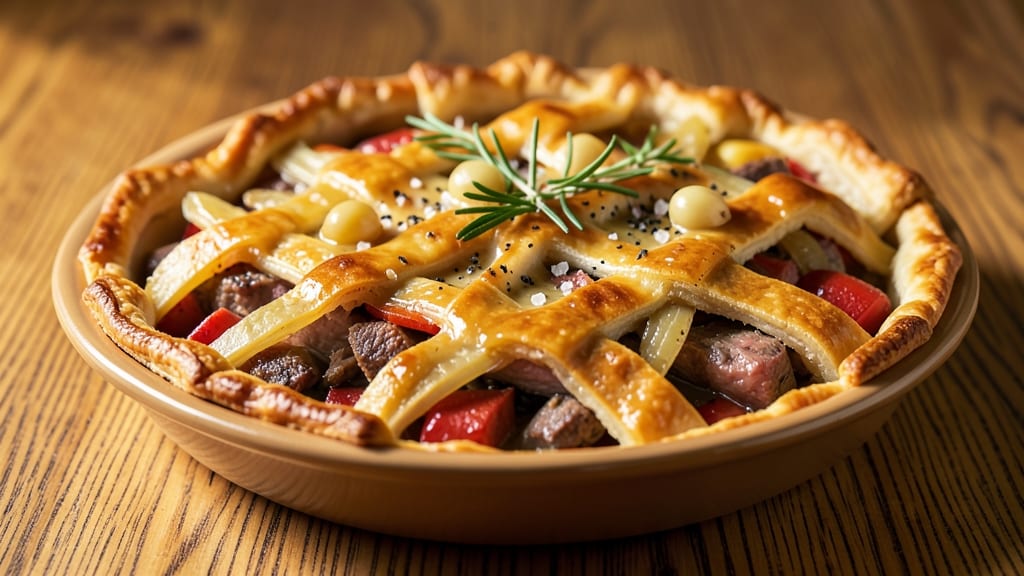
This flaky pork and beef pie recipe brings the heart of Southern comfort to your table with a golden crust and rich, savory filling. 🔥 I developed it after years of perfecting meat pies at The Smoky Pig, where we served hundreds weekly—now you can recreate that restaurant-quality experience at home.
The secret lies in using a mix of pork shoulder and chuck roast for deep flavor, slow-cooked until tender, then encased in buttery puff pastry that crisps to perfection.
The filling starts with a classic mix of ground pork and beef, onions, and herbs that simmer until the meat practically falls apart. I like to add a splash of red wine and a bay leaf for depth, letting it cook low and slow to develop those rich, caramelized flavors.
Meanwhile, the pastry gets its signature flakiness from proper layering and a light hand with the rolling pin—no shortcuts here, just the real deal.
By the time it emerges from the oven, you'll have a pie with a golden brown, shatteringly crisp crust and a filling so tender it melts in your mouth.
The aroma alone will have everyone gathering around the table, and each bite delivers that perfect balance of savory meat, aromatic herbs, and buttery pastry. This is the kind of dish that turns ordinary weeknights into special occasions.
Serve it with a simple green salad or steamed vegetables to let the pie shine as the star. The leftovers? Even better the next day, if you can resist eating the whole thing fresh out of the oven. Let's get baking—your taste buds will thank you.
Ingredients for pork and beef pie
The perfect mix of tender meat and golden crust—just these ingredients transform a weeknight into a special occasion.
| Ingredient | Amount | Notes |
|---|---|---|
| Pork Shoulder 🐖 | 1 ½ lb | Cut into 1-inch cubes |
| Chuck Roast 🥩 | 1 ½ lb | Cut into 1-inch cubes |
| Yellow Onions 🧅 | 2 medium | Diced, about 1.5 cups |
| Carrots 🥕 | 2 medium | Diced, about 1 cup |
| Garlic Cloves 🧄 | 4 cloves | Minced, about 1 tbsp |
| Ground Black Pepper 🌶️ | 1 tbsp | Freshly ground preferred |
| Dried Thyme 🌿 | 1 tbsp | Or 1 tbsp fresh thyme |
| Bay Leaves 🍃 | 2 whole | Removed before serving |
| Red Wine 🍷 | ½ cup | Bold dry variety |
| All-Purpose Flour 🌾 | 2 cups | For thickening sauce |
| Unsalted Butter 🧈 | ½ cup | Cold, cubed for pastry |
| Puff Pastry 🥧 | 1 sheet | Store-bought or homemade |
| Large Egg 🥚 | 1 whole | Beaten for egg wash |
| Coarse Salt 🧂 | 1 tbsp | For sprinkling on crust |
The meat is where the magic happens. Pork shoulder and chuck roast give you that deep, savory flavor—don't skimp on quality here. I always grab mine from Costco or the butcher counter at Whole Foods, looking for good marbling. The carrots and onions? Baby carrots and sweet onions add natural sweetness, but regular grocery store stuff works fine too. Fresh thyme is ideal, but dried works at one-third the amount. For the red wine, Cabernet Sauvignon or Merlot are my go-tos—whatever's open in the fridge will do just fine.
No red wine? Beef broth with a splash of balsamic works in a pinch. Short on thyme? Rosemary at half the amount gives a different but still delicious vibe. The puff pastry can be store-bought (I use Pepperidge Farm or Trader Joe's brand) or homemade if you're feeling ambitious. For the butter, unsalted is a must—salted can make the crust taste off. The carrots can be baby carrots if that's what's in the fridge, but peeling them first gives you cleaner diced pieces.
This pie tastes even better the next day, so always make extra. Store leftovers in an airtight container for up to 4 days. The filling can be prepped ahead and refrigerated for 2 days before baking. For the pastry, keep it wrapped in the fridge until ready to use—it's best used within 2 days of purchase. Freezing? The filling freezes beautifully for 3 months, but the pastry is best used fresh.
Why You'll Love This Recipe
- One-Pot Magic: I swear by this recipe when I’m too tired to dirty multiple pans. Toss the pre-chopped veggies—onions, carrots, and garlic—right into the pot with the pork shoulder and chuck roast, and let the slow cooker or oven do the heavy lifting. No peeling, no dicing, just dump and simmer.
- Rich Layered Taste: Between the tender chuck roast’s deep savoriness and the pork shoulder’s melt-in-your-mouth texture, every bite is a win. The onions caramelize just enough to sweeten the filling, while the garlic cloves add that subtle punch that makes you reach for seconds.
- Weeknight to Holiday: Honestly, this pie is my secret weapon for lazy Mondays and Thanksgiving leftovers. Serve it with crusty bread for a casual lunch or dress it up with a flaky puff pastry for a showstopper dinner. It’s the same filling—just different vibes.
- Budget-Friendly Feast: A pound of pork shoulder and chuck roast stretches further than you’d think, especially with the veggies bulking it out. I’ve fed six people for under $12, and the leftovers? Even better reheated the next day—if they last that long.
Step-by-step instructions for pork and beef pie
Here's how to build a showstopping pie with tender meat and golden pastry.
🍳 Step 1: Sear the Meat for Deep Flavor
Heat a large Dutch oven over medium-high heat and add the 1.5 lb pork shoulder and 1.5 lb chuck roast, both cut into 1-inch cubes. Cook in batches without overcrowding for 5-6 minutes until deeply browned on all sides. This step creates the rich foundation for your filling.
As you sear, remove the meat and set it aside. In the same pot, add the 2 medium yellow onions and 2 medium carrots, both diced, along with the 4 minced garlic cloves. Cook for 5 minutes until softened and fragrant. Here's the thing—don't rush this step. The onions should caramelize slightly, adding sweetness to balance the meaty richness.
👨🍳 Step 2: Build the Savory Filling
Return the browned meat to the pot and add 0.5 cup red wine, scraping up any browned bits from the bottom. Let it simmer for 3-4 minutes until the wine reduces by half. Stir in 1 tbsp dried thyme, 1 tbsp ground black pepper, and the 2 bay leaves, then add 2 cups all-purpose flour to thicken the mixture.
Pour in 1 cup water and stir constantly until you have a thick, gravy-like consistency. The filling should coat the back of a spoon and hold its shape when spooned. If it's too thick, add a splash more water. This is your base—get it right now, and the whole pie benefits. Let the mixture cool slightly while you prepare the pastry.
🥘 Step 3: Assemble the Pie for Perfect Layers
Roll out the 1 sheet puff pastry on a lightly floured surface until it's about 12x10 inches. Transfer it to a baking sheet and spread the meat filling evenly over the pastry, leaving a 1-inch border around the edges. Brush the border with the beaten large egg for extra crispiness.
Fold the edges of the pastry up and over the filling, pinching them together to seal. Use a fork to crimp the edges decoratively and create a lattice pattern by cutting the remaining pastry into strips. Weave these strips over the filling in a crisscross pattern for that classic pie look. Sprinkle the top with 1 tbsp coarse salt for extra flavor.
🔥 Step 4: Bake to Golden Perfection
Preheat your oven to 400°F. Place the assembled pie on a parchment-lined baking sheet and bake for 45-50 minutes until the pastry is deep golden brown and the filling is bubbling. The crust should be crisp and flaky, not soggy.
Here's where it gets exciting—remove the pie from the oven and let it rest for 10 minutes before serving. This resting time lets the filling set and the juices redistribute. If the crust starts to brown too quickly, tent it loosely with foil. Serve warm with a side of crusty bread to soak up every last bit of that rich filling.
Pro Tips For Making Pork And Beef Pie
- Sear the Meat in Batches: That cast-iron skillet won’t hold both cuts at once, and crowding means steamed meat instead of golden crust. Brown pork shoulder first, then chuck roast—high heat, 3-4 minutes per side—before adding onions and carrots. I learned this the hard way when my first pie tasted like stew.
- Cut Onions and Carrots Uniformly: No one wants mushy chunks or crunchy sticks in pie filling. Slice onions into ½-inch dice and carrots into ¼-inch rounds—small enough to cook through but big enough to stay recognizable. My grandmother swore by this, and she was right: even cooking matters.
- Deglaze with Red Wine: Skip the beef broth shortcut—use ½ cup red wine (like Cabernet) when deglazing. The acid cuts through fat, and the depth of flavor actually changes the outcome. (Yes, even if you’re impatient like me, let it simmer 2 minutes to cook off the alcohol.)
- Rest the Meat Before Slicing: That juicy pile of meat will turn dry if you cut it straight out of the oven. Tent with foil and let it sit 10 minutes—5 if you’re in a rush, but your future self will thank you. The pork shoulder especially needs this; it’s the thing that matters most for texture.
Wine and beer pairings for these flavors
Red Wine Pairings
For this hearty pork and beef pie, I always reach for a bold red wine with enough structure to stand up to the rich meat filling. A Cabernet Sauvignon from Napa Valley—like Caymus Vineyards—brings deep blackcurrant and tobacco notes that complement the savory filling beautifully.
The tannins cut through the butteriness of the pastry while the wine's acidity refreshes your palate between bites. 🍷
Malbec for Depth
If you prefer something slightly fruitier, a Malbec from Argentina—such as Catena Zapata—adds layers of dark plum and mocha flavors that pair exceptionally well with the thyme and bay leaf in the filling.
The wine's velvety texture mirrors the pie's creamy pastry, creating a luxurious mouthfeel. I keep a bottle of this in my fridge specifically for meat pies.
Beer Pairings
For beer lovers, a dark ale or stout works wonders. I love pairing this pie with a Guinness—the roasted maltiness and slight bitterness balance the richness of the meat and butter beautifully.
Alternatively, a Belgian dubbel like Westmalle Dubbel brings caramel and spice notes that harmonize with the pie's savory-sweet filling.
Lighter Options
If you're serving this pie at a summer gathering, a crisp Sauvignon Blanc from New Zealand—like Cloudy Bay—can work surprisingly well. The citrusy acidity cuts through the richness, while the herbal notes echo the thyme in the filling.
It's not traditional, but it's a refreshing twist that keeps the meal feeling light and vibrant. 🍺
Regional Specialty
In the Southeast, where I grew up, we often paired meat pies with a local Georgia wine like Pineview Mountain Vineyards' Cabernet Franc. The wine's bright red fruit and subtle earthiness make it a perfect match for the pie's rustic charm.
If you're in the neighborhood, grab a bottle—it's a hidden gem that elevates the dish to new heights.
Nutrition facts
Frequently asked questions
Can I use ground meat instead of cubed pork and beef?
You can absolutely use ground meat, but the texture will be different. For a more traditional pie, I recommend sticking with 1-inch cubes of pork shoulder and chuck roast—they stay tender and develop deeper flavor during slow cooking. If you prefer ground meat, use 1 lb each of ground pork and beef and reduce the flour to 1.5 cups since it won't need as much thickening.
How do I make this pie ahead of time?
This pie actually tastes even better the next day! Assemble the pie (without baking) and refrigerate for up to 24 hours. When ready to bake, let it sit at room temperature for 30 minutes before baking as directed. For a make-ahead filling, cook the meat mixture and refrigerate it (covered) for 2 days, then reheat gently before assembling.
What if my puff pastry gets soggy?
Soggy pastry happens when steam escapes too quickly. To prevent this, brush the pastry with beaten egg wash before baking, and consider baking at 375°F instead of 400°F for 5-10 minutes longer. For extra insurance, place a small baking sheet on the rack below your pie to catch any drips. The filling should be hot but not boiling when you assemble it.
Can I use shortcrust pastry instead of puff pastry?
Yes, but the texture will be different. Shortcrust is denser and less flaky, which works well for hearty fillings. Use 1.5 cups flour, 0.5 cup cold butter, 1 tsp salt, and 3-4 tbsp ice water to make your own, or buy pre-made. Blind-bake the crust for 10 minutes at 375°F before adding filling, then bake covered with foil for 40 minutes before uncovering.
What's the best way to reheat leftovers?
Slice the pie and reheat in a 350°F oven for 15-20 minutes until warmed through. For microwave reheating, cover with a damp paper towel and heat in 30-second intervals at 50% power. The pastry stays crispier when reheated gently. Store leftovers in an airtight container for up to 4 days in the fridge.